

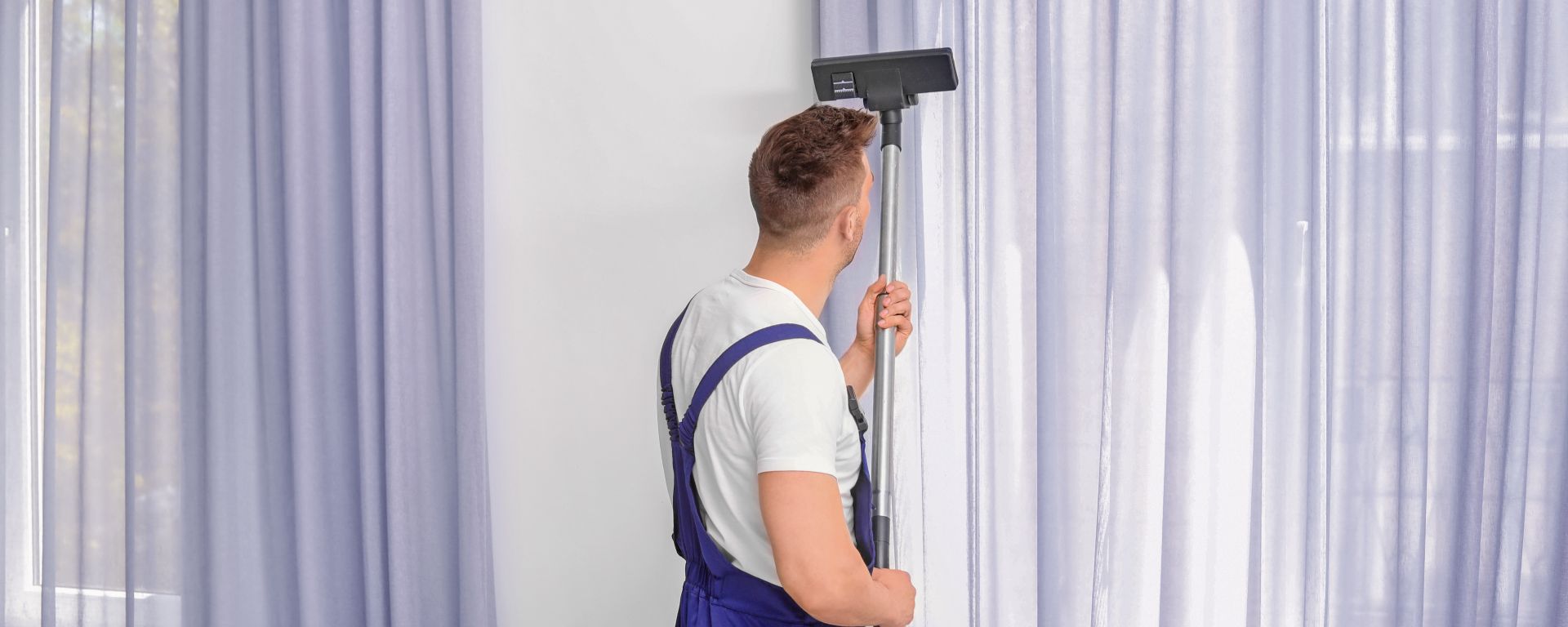
Curtains are one of the most overlooked soft furnishings in any home. People wash their bedsheets regularly, vacuum their sofas, and wipe down their blinds, but curtains often get ignored for months or even years at a stretch. In Singapore’s climate, where humidity stays persistently high and dust accumulates quickly, that oversight has real consequences for your home environment and for the longevity of the fabric itself.
The problem is not just dirt. It is the combination of dust, moisture, trapped allergens, and airborne pollutants that settle into curtain fabric over time. What looks clean from across the room may be harboring a surprising amount of buildup in its folds. And when you finally decide to clean them, the method you choose matters enormously.
Not every curtain can go into a washing machine. Getting that wrong can mean a fabric that shrinks, warps, fades, or loses its structure entirely. That is an expensive mistake when you are dealing with quality window treatments.
Why the Cleaning Method Matters as Much as the Cleaning Itself
Most people default to machine washing because it is the easiest option available at home. For everyday cotton or polyester curtains, that can work reasonably well. But for a large proportion of curtain types, particularly those made from premium or structured fabrics, machine washing causes more damage than the dirt it removes.
The mechanics of a washing machine, the water, the heat, the agitation, are designed for robust fabrics. Delicate weaves, natural fibers, and structured linings do not respond well to that kind of treatment. They shrink unevenly, lose their shape, or suffer fiber damage that is impossible to reverse.
This is why knowing your curtain fabric before deciding on a cleaning method is not optional. It is the starting point for keeping your curtains in good condition over the long term.
Types of Curtains That Require Professional Dry Cleaning in Singapore
Silk and Velvet Curtains
Silk is one of the most sensitive natural fibers used in home furnishings. It absorbs water readily and responds poorly to agitation, which means a standard machine cycle can cause irreversible shrinkage or distortion in the weave. Even cool, gentle machine settings carry real risk for silk panels.
Velvet presents a different but equally serious problem. The pile on velvet fabric, which gives it that distinctive soft appearance, crushes permanently when wet and agitated. Once crushed, it does not spring back. Professional curtain dry cleaning Singapore specialists use solvent-based processes that clean the fabric thoroughly without exposing the fibers to water or mechanical stress, preserving both the appearance and the structural integrity of the fabric.
Lined and Interlined Curtains
Lined curtains are more complex than they appear. The outer fabric and the lining are two separate materials sewn together, and they frequently have different shrinkage rates. When you put a lined curtain through a machine wash, the two layers contract at different speeds and to different degrees. The result is a curtain that bubbles, puckers, or no longer hangs properly against your window.
Professional cleaning treats each layer with appropriate care and ensures the curtain comes back fitting your window the same way it did when it was installed. That is something a machine wash simply cannot guarantee.
Embroidered and Embellished Curtains
Curtains featuring hand or machine embroidery, beading, sequins, or decorative trims are not suitable for machine washing under any circumstances. The water pressure and agitation loosen thread tension in embroidered sections, which causes patterns to distort or unravel. Beads and sequins can crack, snag adjacent fabric, or pull the base material out of alignment.
These curtains require individual assessment and gentle handling throughout the entire cleaning process. A trained specialist will evaluate the fabric construction and embellishments before selecting the safest and most effective method.
Wool and Brocade Curtains
Wool felts when exposed to heat and agitation. This is not a gradual process. A single machine wash on the wrong setting can reduce a full-length wool curtain by a significant margin. Once felted, wool cannot be returned to its original state.
Brocade features raised woven patterns that give it a formal, textured appearance. Those raised sections flatten or warp under machine washing conditions, removing the very quality that makes brocade curtains worth having in the first place. Both fabrics hold up reliably under professional dry cleaning because the process avoids the conditions that cause damage.
Sheer and Voile Curtains
Sheers and voile panels look delicate because they are. Their fine, open weave makes them prone to tearing during machine cycles, especially along seam lines and hemmed edges where tension concentrates. They also develop permanent creases that are very difficult to remove without professional pressing equipment.
A quality laundry service that handles curtains will press sheers and voile panels correctly after cleaning, restoring the smooth, light-catching drape that makes them a popular choice for Singapore homes.
Signs Your Curtains Are Overdue for Professional Cleaning
Many homeowners wait until the curtains look visibly dirty before acting. By that point, the fabric has typically been carrying a significant buildup for some time. These are the signs that tell you cleaning is overdue:
- Dust settling visibly along the top pleats, header tape, or folded sections
- A stale or musty smell that persists even after the windows are opened
- Staining or discoloration along the bottom hem from contact with the floor or windowsill
- Colors appear faded, patchy, or uneven in areas exposed to direct sunlight
- Fabric that feels stiff, rough, or heavier than it used to
- Increased allergy symptoms among household members, particularly in rooms with heavy drapery
If any of these apply to your curtains, the cleaning has already been delayed longer than ideal. The longer the contaminated fabric sits, the harder it becomes to restore the curtain to its original condition.
How Often Should Different Curtain Types Be Cleaned?
- Silk and velvet: Professionally cleaned at least once every 12 months
- Lined and interlined curtains: Every 12 to 18 months, depending on room usage and dust levels
- Sheers and voile: Every 6 to 12 months, as their open weave collects dust faster than denser fabrics
- Embroidered and embellished curtains: Once per year or when visibly soiled
- Wool and brocade: Annually, ideally before the monsoon season when humidity peaks
These are conservative estimates for a typical Singapore home. If someone in your household has allergies, asthma, or other respiratory sensitivities, cleaning more frequently than this schedule suggests is a reasonable precaution.
What Professional Curtain Cleaning Actually Involves
A proper curtain cleaning service does not simply run your panels through a machine and return them. The process begins with a fabric inspection to identify the material composition, construction method, and any existing damage or staining. Pre-treatment is applied to stained areas before the main cleaning process begins.
The cleaning method is selected based on the fabric, not applied uniformly to every curtain, regardless of type. After cleaning, the curtains are finished and pressed so they hang correctly. Many providers in Singapore now include free pick-up and delivery as part of their standard service, which removes the logistical challenge of transporting heavy curtain panels yourself.
Turnaround on standard orders typically runs four to five working days. Express services are available for situations where you need curtains back within 3 to 4 days, though these carry an additional charge.
FAQs
Q1. Can I use a home dry cleaning kit on my curtains instead of sending them out?
Home dry cleaning kits are designed for light refreshing of small garments. They are not formulated to remove the volume of dust, allergens, and deep staining that builds up in curtains over months of use. They are also not appropriate for delicate fabrics like silk, velvet, or wool, where the wrong treatment can cause permanent damage.
Q2. Will professional dry cleaning cause my curtains to shrink or lose their shape?
When done correctly by trained specialists, professional dry cleaning should not cause shrinkage or shape distortion. The solvent-based process avoids the water exposure and mechanical agitation that lead to those problems in machine washing. The key is choosing a provider with genuine experience handling different fabric types.
Q3. How long does curtain dry cleaning in Singapore take, and is pick-up and delivery included?
Most professional services complete curtain cleaning within 4 to 5 working days from collection. Express options returning curtains within 3 to 4 days are usually available at an additional charge. Many providers offer free pick-up and delivery above a minimum spend threshold, making the process significantly more convenient than it used to be.